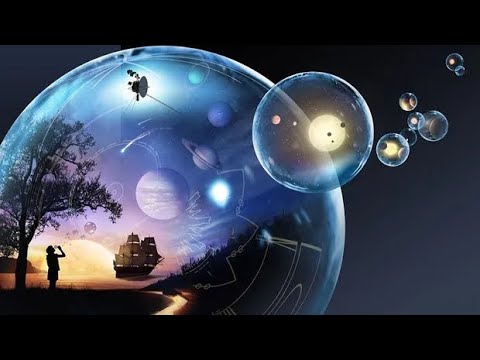
Despite decades of sending sounds and pictures into space no aliens have responded. Have we been doing it wrong? Tracey Logan investigates, and discovers some novel attempts to make contact – including the smells of our planet.
Artist Carrie Paterson has long dreamed of beaming messages far out to the emptiness of space. Except her messages would have an extra dimension – smell.
By broadcasting formulae of aromatic chemicals, she says, aliens could reconstruct all sorts of whiffs that help to define life on Earth: animal blood and faeces, sweet floral and citrus scents or benzene to show our global dependence on the car. This way intelligent life forms on distant planets who may not see or hear as we do, says Paterson, could explore us through smell, one of the most primitive and ubiquitous senses of all.
Her idea is only the latest in a list of attempts to hail intelligent life outside of the Solar System. Forty years ago this month, the Arecibo radio telescope in Puerto Rico sent an iconic picture message into space – and we’ve arguably been broadcasting to aliens ever since we invented TV and radio.
However in recent years, astronomers, artists, linguists and anthropologists have been converging on the idea that creating comprehensible messages for aliens is much harder than it seems. This week, Paterson and others discussed the difficulties of talking to our cosmic neighbours at a conference called Communicating Across the Cosmos, held by Seti (Search for Extraterrestrial Intelligence). It seems our traditional ways of communicating through pictures and language may well be unintelligible – or worse, be catastrophically misconstrued. So how should we be talking to ET?
We have always wanted to send messages about humanity beyond the planet. According to Albert Harrison, a space psychologist and author of Starstruck: Cosmic Visions in Science, Religion and Folklore, the first serious designs for contacting alien life appeared two centuries ago, though they never got off the ground.
In the 1800s, mathematician Carl Gauss proposed cutting down lines of trees in a densely forested area and replanting the strips with wheat or rye, Harrison wrote in his book. “The contrasting colours would form a giant triangle and three squares known as a Pythagoras figure which could be seen from the Moon or even Mars.” Not long after, the astronomer Joseph von Littrow proposed creating huge water-filled channels topped with kerosene. “Igniting them at night showed geometric patterns such as triangles that Martians would interpret as a sign of intelligence, not nature.”
But in the 20th Century, we began to broadcast in earnest. The message sent by Arecibo hoped to make first contact on its 21,000 year journey to the edge of the Milky Way. The sketches it contained, made from just 1,679 digital bits, look cute to us today, very much of the ‘Pong’ video game generation. Just before then, Nasa’s Pioneer 10 and 11 space probes each carried a metal calling card bolted onto their frame with symbols and drawings on the plaque, showing a naked man and woman.